Abandoned cart email examples (and the 3-email sequence that works)
What to send, when to send it, which subject lines to use, and what to fix in your cart before you write a single email.

By Nicolas Fradet, founder of FunnelSpark · 16 years in CRO, 1,000+ A/B tests
Updated Nov 7, 2026 · 8 min read
The short answer
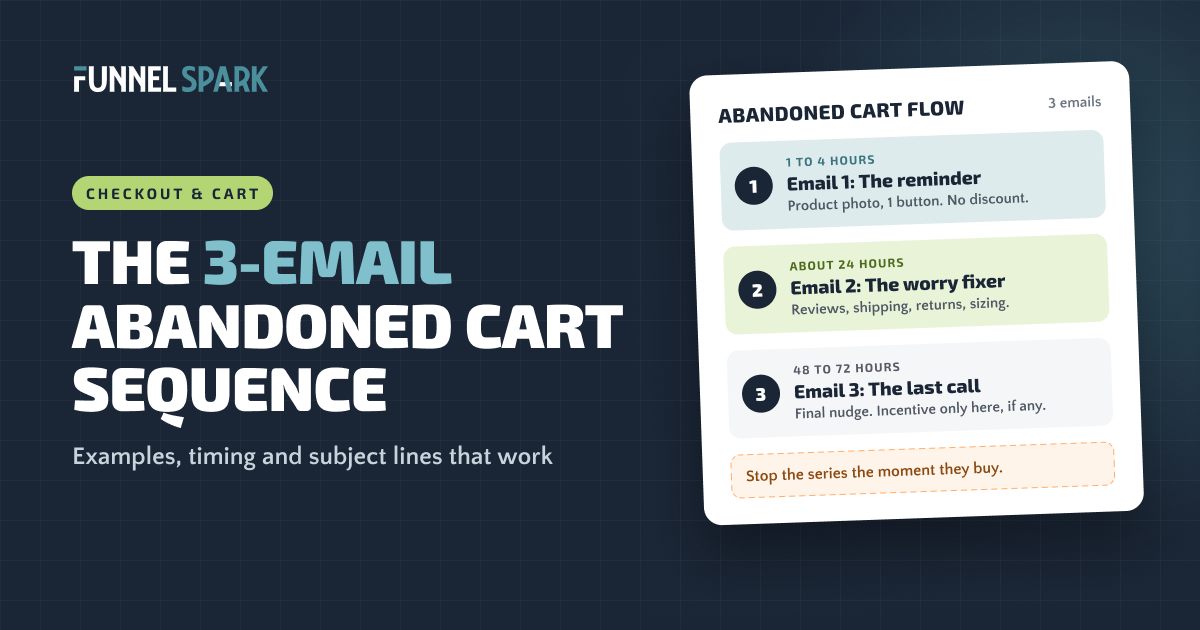
For most stores, 3 abandoned cart emails work best: a plain reminder 1 to 4 hours after the shopper leaves, a "worry fixer" about 24 hours later that answers shipping, returns and fit questions, and a last call at 48 to 72 hours. Save any discount for the last email, and stop the series the moment they buy.
What is an abandoned cart email?
An abandoned cart email is an automatic email sent to a shopper who added products to their cart, or started checkout, and left without buying. It reminds them what they left, answers the question that stopped them, and brings them back to finish the order. Winning those shoppers back is what people mean by abandoned cart recovery.
The catch: you can only email people you can identify. Shopify's help center says a checkout counts as abandoned once the shopper has entered their email and left it unfinished for more than 10 minutes. No email, no reminder.
Do abandoned cart emails work?
Yes. They go to people who were minutes away from buying.
in revenue per recipient, on average, from abandoned cart email flows. The top 10% of brands earn $13.70. Source: Klaviyo's abandoned cart benchmarks, an analysis of more than 110,000 Klaviyo customers.
Omnisend's benchmark data for its own users agrees: 1.51% of abandoned cart emails lead to an order, and nearly 4 in 10 shoppers who click one go on to buy.
Keep it in perspective, though. Baymard Institute's average of 50 studies puts cart abandonment at about 70%. Emails win back a slice of those shoppers. Fixing the reasons they left wins back more, including the ones who never gave you their email.
The 3-email sequence that works
Each email has one job. Here's the sequence we'd start with on almost any store, then test.
The 3-email abandoned cart sequence
They typed their email at checkout, so you can reach them.
- Cart items with photos
- 1 button back to the cart
- No discount
- Shipping cost and timing
- Returns in 1 line
- Reviews, sizing help
- "Your cart is still saved"
- Real scarcity only
- Incentive here, if any
Email 1: the reminder (1 to 4 hours after they leave)
Short and plain. Show the products with photos and prices, and one button back to a cart that's already filled. No discount. Plenty of shoppers simply got interrupted, so a reminder is all they need.
The platforms don't agree on timing. Omnisend says a 30 to 60 minute delay works best. Klaviyo recommends 2 to 4 hours, and its prebuilt flow waits 4 hours. Anywhere from 1 to 4 hours is a fine start. Test it later.
Email 2: the worry fixer (about 24 hours later)
If the reminder didn't work, something is holding them back. In Baymard's research, 40% of shoppers who abandoned (leaving out the "just browsing" group) said extra costs like shipping, tax or fees were too high. Slow delivery, trust and returns come up often too. So under the cart and button, email 2 answers those worries:
- Shipping: what it costs and when it arrives.
- Returns: your policy in 1 line.
- Proof: 2 or 3 short reviews of the products in their cart.
- Fit: a size guide link, if your products need one.
Email 3: the last call (48 to 72 hours)
The final nudge. Tell them their cart is still saved, and if there's real scarcity (low stock, a sale that ends), say so honestly. Never invent a deadline.
This is the only email where an incentive belongs, if you use one at all. Klaviyo's benchmarks page warns that discounts can train shoppers to wait for one, and suggests keeping incentives for high-value carts. Free shipping is often a cheaper push than a percentage off. Compare offers on profit, not only orders: here's how BOGO, gift with purchase and discounts compare. After email 3, stop.
Abandoned cart email subject lines
The subject line has to earn the open first. Match it to the job of each email, and swap in your own product names.
| Subject line ideas | Why it works | |
|---|---|---|
| 1. Reminder | "You left something in your cart" "Still thinking about the [product]?" "We saved your cart" | Plain and clear. They know what it is before they open it. |
| 2. Worry fixer | "Questions about the [product]? Answers inside" "What customers say about the [product]" "Free returns, just so you know" | Leads with the worry, not the sale. |
| 3. Last call | "Last reminder: your cart is still here" "Your [product] is almost sold out" (only if true) "Free shipping on your cart until Sunday" (if you offer it) | Makes it clear this is the final email. |
Keep them short so a phone doesn't cut them off, and keep discounts out of the first one, or shoppers learn to leave carts on purpose.
Abandoned cart email examples, described
We went through the abandoned cart category of Really Good Emails, a public gallery of real brand emails. We won't copy their wording, but the patterns are worth borrowing:
- Product first. Gantri, a lighting brand, keeps its subject line to one idea: the light is still there, come take another look. That's email 1 in a single line.
- Brand voice. Milk Bar, the bakery, uses a cheeky "did you forget something?" line. A fun brand can send a fun reminder.
- A customer's voice. One email uses a short customer-style quote as the subject line. That's email 2's social proof, moved into the inbox.
- Honest scarcity. An activewear email tells the shopper the exact item in their cart sold out. When it's true, that's a strong last call, and a natural spot to suggest a similar item.
- Free shipping, not a discount. Another email puts free shipping in the subject line. Same push as a coupon, usually for less margin.
- A soft question. Blueland asks whether something caught the shopper's eye. It reads like a friendly shop assistant.
We only saw subject lines, not results, so treat these as ideas to test, not proven winners.
Fix your cart before you write the emails
An email can bring a shopper back. But if the cart still hides the shipping cost, they'll leave again. Here's what the 25 top stores we broke down page by page do in the cart and checkout:
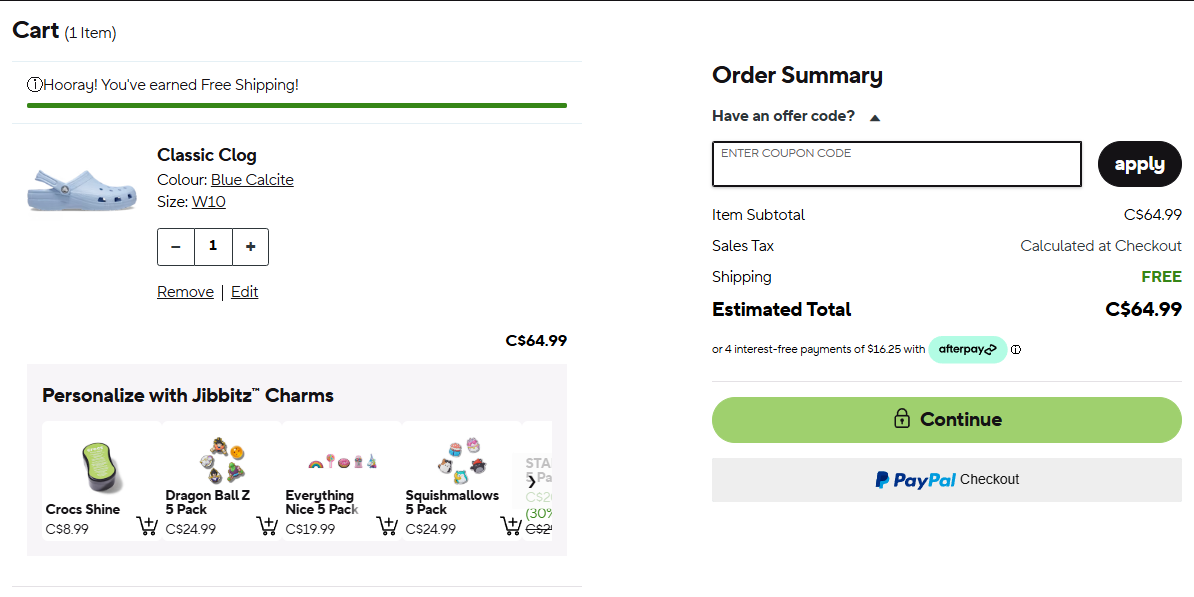
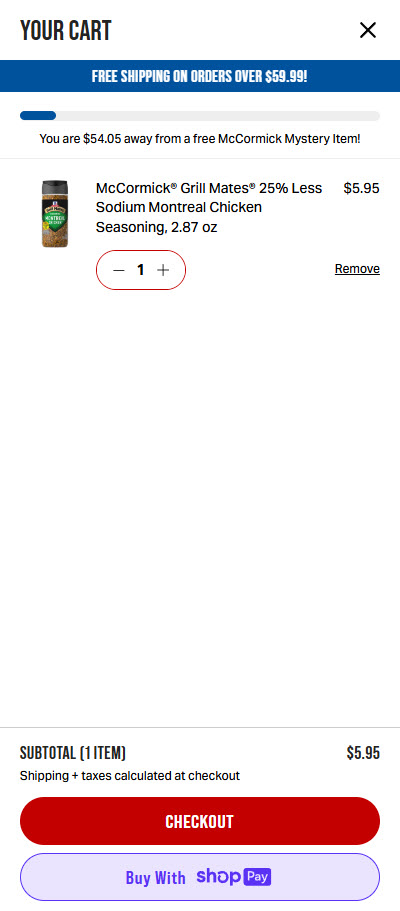
- Show shipping early. 15 of the 25 show a free shipping threshold or confirm free shipping in the cart or checkout. If you're setting one, read how to set your free shipping threshold first.
- Offer fast ways to pay. 24 of the 25 offer several ways to pay, and 10 show payment options or payment info right in the cart.
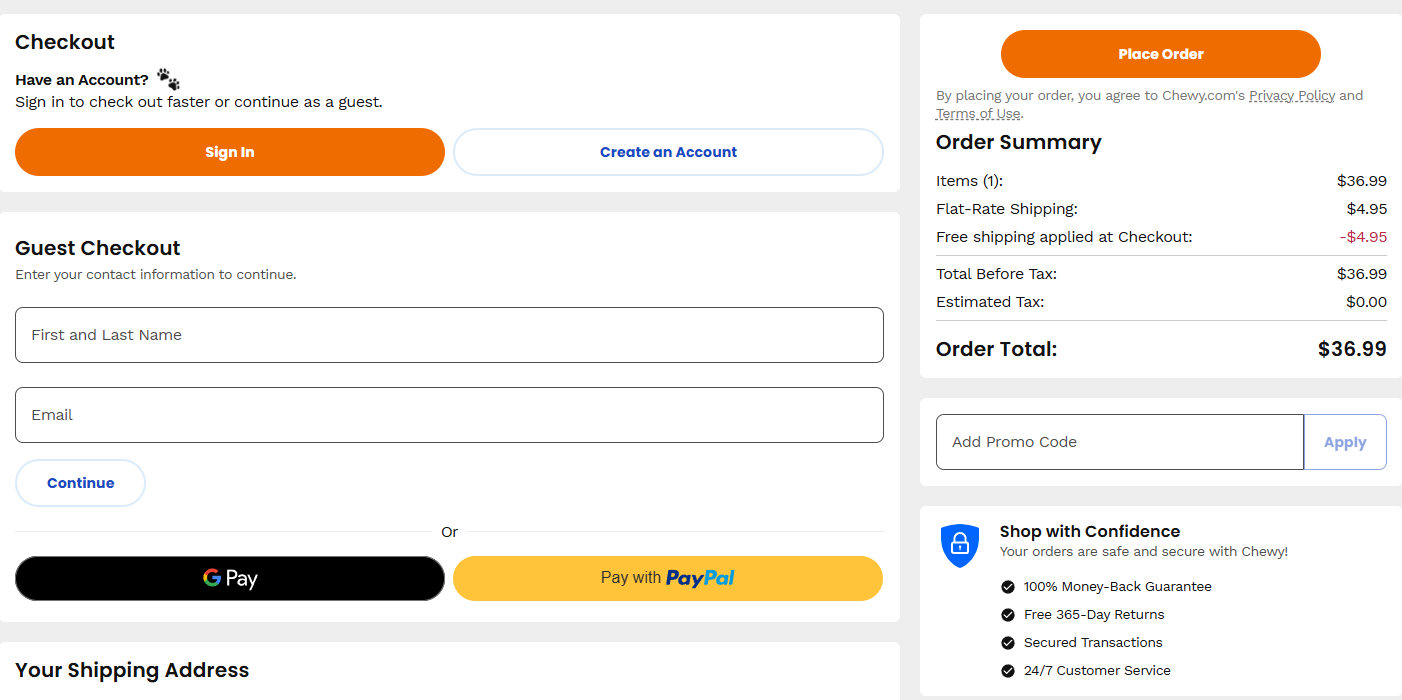
- Answer worries near the button. 12 of the 25 make a guarantee or returns promise somewhere in the funnel. On Shopify, custom text inside the checkout steps needs Shopify Plus, so on other plans put that line in the cart, just above the checkout button.
- Ask for the email first. Keep the email field at the top of checkout. Shopify's help center notes that if a shopper enters a phone number instead, the recovery email can't be sent.
The full checklist, from cart to thank-you page, is in our guide on how to reduce cart abandonment. For what you can and can't change inside Shopify's checkout, see our Shopify checkout optimization guide.
How to set up abandoned cart emails on Shopify
- Turn on Shopify's built-in email. Shopify can automatically email shoppers who abandon checkout, and you choose how long it waits. Its help center now recommends the newer abandoned checkout automation in the Shopify Messaging app. It's a good single reminder while you build the rest.
- Build the 3 emails in an email app like Klaviyo or Omnisend, with the products, images and a link that restores the cart. Klaviyo's help center also suggests a second flow for known shoppers who added to cart but never started checkout.
- Add a "placed order" filter. In Klaviyo it reads "placed order zero times since starting this flow." It stops the series the moment someone buys.
- Test it on yourself. Add something to your cart with your own email, leave, and check that all 3 emails arrive, look right on your phone, and bring back your cart.
How to know your emails are working
Don't judge abandoned cart emails by open rate. Judge them by orders and money:
- Revenue per recipient: revenue from the flow divided by the people who got it.
- Orders per email: if email 3 brings almost nothing, test cutting it.
- Unsubscribes: a jump on the last email means it's too pushy.
Then test one thing at a time: 1 email vs 3, or free shipping vs a discount in email 3. Expect surprises. Of the 1,000+ A/B tests FunnelSpark, an ecommerce CRO agency for Shopify stores, has run, 37% beat the original. Plenty of "obvious" ideas don't win. Our guide to ecommerce A/B testing shows how to run and read a test, and revenue per visitor is the number we use to call winners.
Most stores spend a week polishing their abandoned cart emails and never look at the cart those emails send people back to. Fix the cart first. Then your emails have something good to bring people back to.
FAQ
3 is a good start: a reminder 1 to 4 hours after the shopper leaves, a worry fixer about a day later, and a last call 2 to 3 days later. Test 1 email against 3 and compare revenue.
Send the first within 1 to 4 hours (Omnisend recommends 30 to 60 minutes, Klaviyo 2 to 4 hours), the second about 24 hours later, and the last 48 to 72 hours after the shopper left.
Yes. In Klaviyo's benchmarks across more than 110,000 customers, abandoned cart email flows average $6.77 in revenue per recipient, and the top 10% of brands earn $13.70.
Not in the first email. If you use an incentive, put it in the last email, consider free shipping instead, and keep it for first-time buyers or bigger carts so regular customers don't learn to wait for it.
Shopify can automatically email shoppers who abandon checkout after entering their email. For a 3-email sequence, use an email app like Klaviyo or Omnisend, with a filter that stops the flow once someone orders.
Written by
Nicolas Fradet
Nicolas is the founder of FunnelSpark, an ecommerce CRO agency. He has spent 16 years finding out why shoppers don't buy, with 1,000+ A/B tests run and a 37% win rate. He wrote Stop Guessing. Start Converting.
Follow Nicolas on LinkedIn →Want us to find what's stopping your shoppers?
On a free 30-minute call, Nicolas looks at your store and shows you 3 growth opportunities, whether we work together or not.
Book your free call