What is CRO? Conversion rate optimization for online stores, explained
What CRO means in marketing, how to calculate your conversion rate, how the process works, and when your store is ready for it.

By Nicolas Fradet, founder of FunnelSpark · 16 years in CRO, 1,000+ A/B tests
Updated Oct 30, 2026 · 8 min read
The short answer
In ecommerce and marketing, CRO stands for conversion rate optimization: getting more of the visitors you already have to buy. You find where shoppers get stuck, form an idea to fix it, test that idea against your current page, and keep what wins. More sales from the same traffic, so every ad dollar works harder.
What does CRO mean?
CRO stands for conversion rate optimization. (Not to be confused with a contract research organization, which is a medical research term. This article is about online stores.)
A "conversion" is the action you want a visitor to take. For an online store, that's usually an order. Your conversion rate is the share of visitors who place one. CRO is the work of raising that number: removing whatever stops ready-to-buy shoppers from buying, and giving the unsure ones a reason to say yes.
In marketing terms, most channels bring people to your store: ads, SEO, email, social. CRO works on what happens after they arrive. That's why it makes every other channel more profitable.
How to calculate your conversion rate
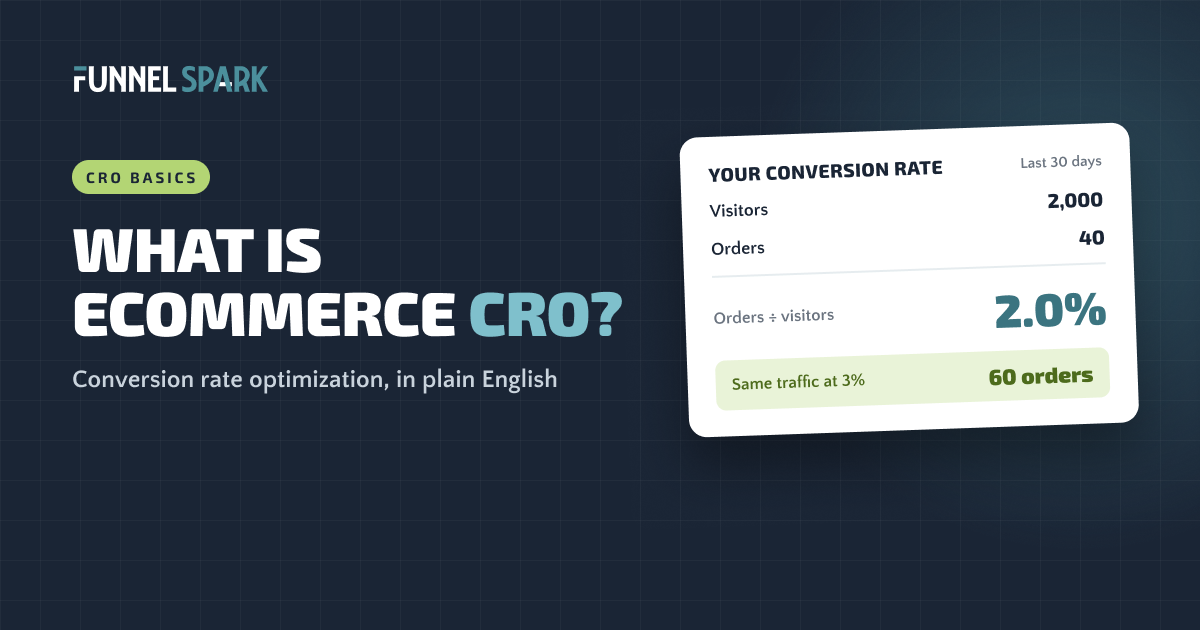
Divide orders by visitors (Shopify counts sessions), then multiply by 100.
Example (a made-up store, to show the math)
| Last 30 days | Today | After CRO |
|---|---|---|
| Visitors | 2,000 | 2,000 |
| Orders | 40 | 60 |
| Conversion rate | 2.0% | 3.0% |
| Revenue at a $60 average order | $2,400 | $3,600 |
Same traffic, same ad budget, 50% more revenue. That's the whole idea of CRO in one table. To run your own numbers, try our revenue calculator.
In Shopify, you'll find your conversion rate on the Analytics dashboard. The conversion rate breakdown under it shows how many sessions added to cart, reached checkout and completed checkout, which tells you where people drop.
How CRO works: the 5-step cycle
Good CRO isn't a list of tricks. It's a loop you run over and over, and each turn teaches you something about your shoppers.
The CRO cycle
- Question: where is the opportunity? Look at your numbers before your pages. Which step loses the most shoppers, and which page gets enough traffic for a fix to matter? That's where you start.
- Understand: why might this be happening? Watch session recordings, read reviews and support emails, and ask buyers what almost stopped them. The goal is the shopper's reason, not your guess.
- Engineer: what change could solve it? Design a fix for the problem you found, and write it as a clear bet: "Shoppers keep leaving at shipping, so showing the shipping cost on the product page will raise orders."
- Split-test: does the change really work? Run an A/B test: split your traffic between the current page and the new version, and let it run until the result is clear.
- Takeaway: what did we learn? Keep winners, drop losers, and write down what the result says about your shoppers. A losing test still tells you what they don't care about, and that lesson becomes your next question.
What CRO changes look like on real stores
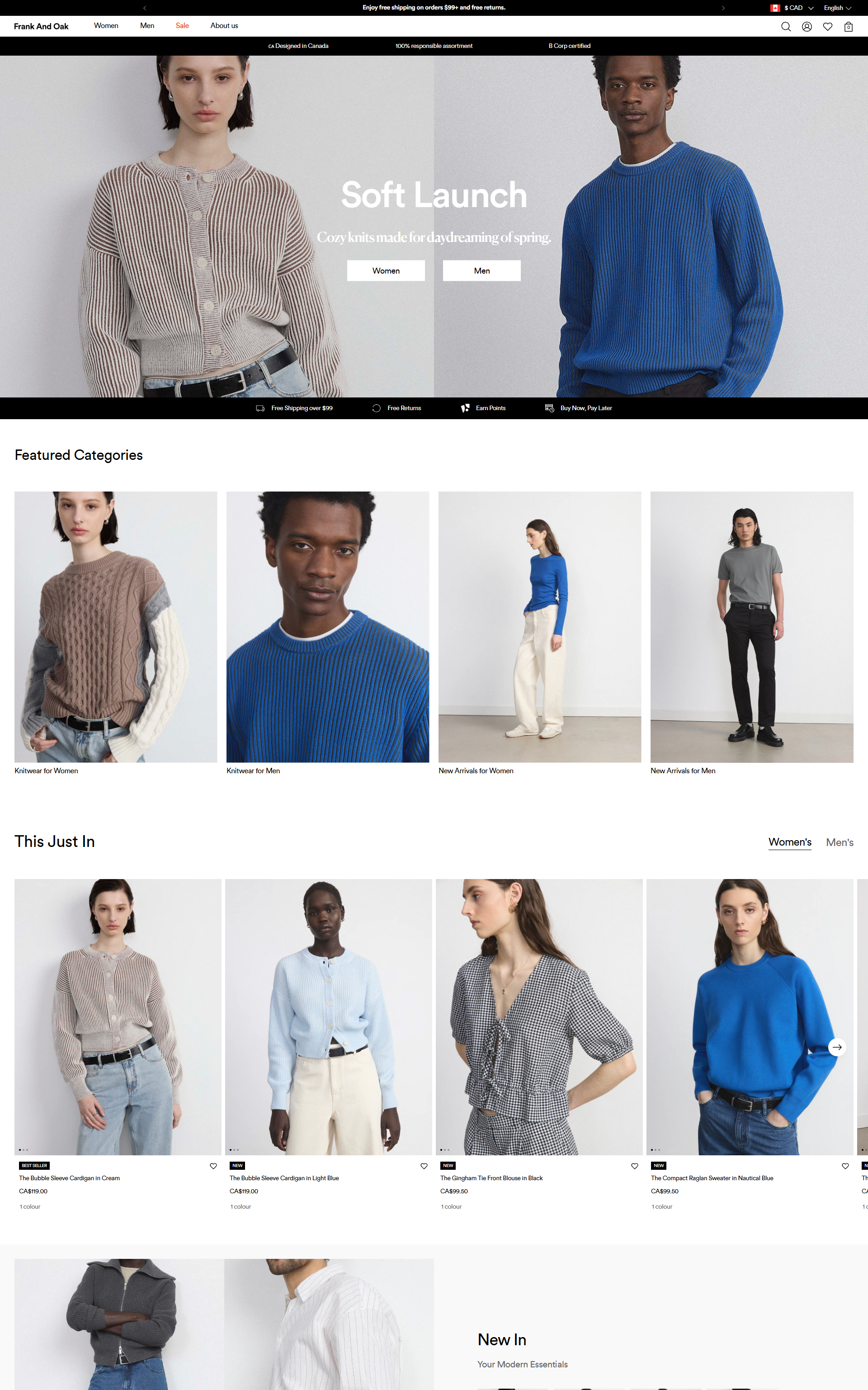
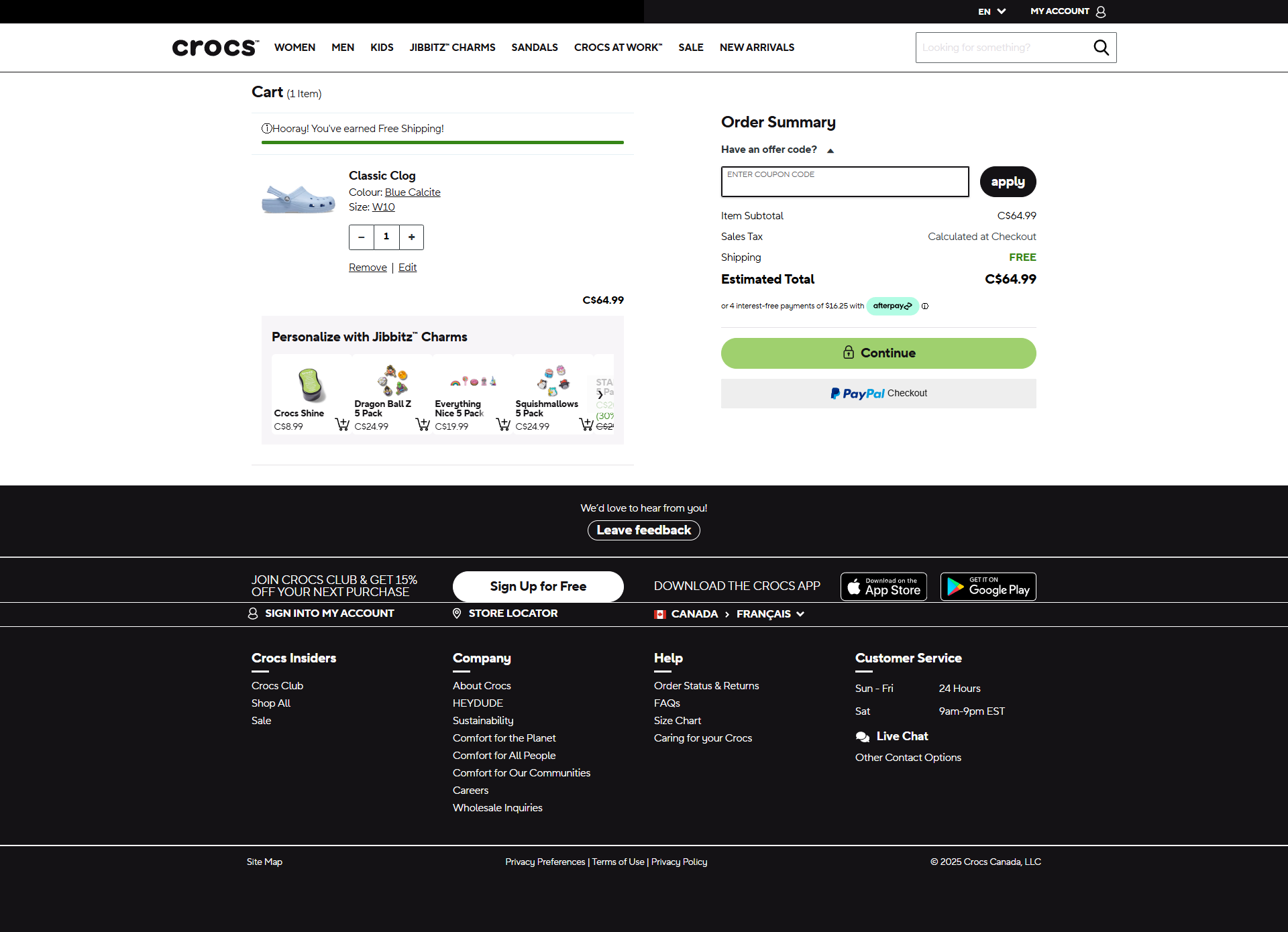
Most CRO wins aren't flashy. They make a page clearer, answer a worry sooner, or remove a step. Here are 2 examples from the 25 top stores we broke down page by page.
CRO vs SEO vs paid ads
CRO doesn't replace your other channels. It multiplies them. Here's how the 3 compare.
| CRO | SEO | Paid ads | |
|---|---|---|---|
| What it does | Turns more visitors into buyers | Brings free visitors from Google | Buys visitors on demand |
| What it changes | Your store: pages, offers, checkout | Content and site structure | Ads, audiences, budgets |
| How fast it works | Weeks per test | Months | Days |
| What happens when you stop | Wins keep paying | Rankings fade slowly | Traffic stops at once |
Here's the link between them: if CRO lifts your conversion rate from 2% to 3%, every visitor from SEO and every click you pay for is suddenly worth 50% more.
4 CRO myths that waste time
- "CRO is about button colors." Button colors rarely matter. The big wins come from the offer, shipping costs, trust, product page content and checkout friction.
- "Just copy best practices." Best practices are a good starting list, not a guarantee. Of the 1,000+ A/B tests we've run, 37% won. That's well above the industry average of about 15%, and it still means most ideas, even good ones, don't lift sales.
- "A redesign is CRO." A redesign changes 50 things at once. If sales move, you won't know why, and redesigns can lower sales too. CRO changes one thing, measures it, and keeps what works.
- "CRO is only for big stores." A/B testing needs traffic, but fixing clear leaks doesn't. Any store can show shipping costs earlier or turn on express checkout today.
Most store owners think CRO means trying random tweaks. It's the opposite. You find out why people don't buy, then you prove what fixes it.
What's a good conversion rate?
Shopify puts the average ecommerce conversion rate at about 2%. But "average" hides a lot. A store selling $20 socks and a store selling $2,000 sofas should never be compared, and the same store converts very differently from email than from cold Facebook ads.
So instead of chasing a benchmark, compare your store to itself: month over month, by traffic source and by device. And watch revenue per visitor (total revenue divided by visitors), not just conversion rate. A change that adds orders but shrinks order size can look like a win when it isn't.
When is your store ready for CRO?
Every store is ready for the first part of CRO: finding and fixing obvious leaks. A/B testing is different. To trust a test result, you need enough visitors to tell a real lift from luck.
Rough visitors needed per version, for a store converting at 2%
| Lift you want to detect | Visitors per version |
|---|---|
| +50% (2% to 3%) | about 3,100 |
| +30% (2% to 2.6%) | about 8,700 |
| +20% (2% to 2.4%) | about 19,600 |
| +10% (2% to 2.2%) | about 78,400 |
A standard rule of thumb, at 95% confidence and 80% power. Smaller lifts need far more traffic, which is why low-traffic stores should test big, bold changes, not small tweaks.
If you're well below these numbers, don't wait. Fix the clear problems first, then start testing as your traffic grows.
How to start CRO on your store this week
- Write down your baseline. Conversion rate, average order value and revenue per visitor for the last 30 days.
- Find where people drop. Check your Shopify conversion rate breakdown, then watch 15 to 20 session recordings at the step with the biggest drop. Our guide to getting more sales on Shopify walks through it.
- Run a checklist. Our 40-point ecommerce CRO checklist covers every page from homepage to checkout.
- Fix the clear leaks. Start closest to checkout: surprise shipping costs, forced accounts, too few ways to pay. Our cart abandonment guide has the full list.
- Test the bigger ideas. New offers, new page layouts and pricing changes are worth an A/B test before you keep them.
Doing this on your own works, but it takes time and a steady testing habit. If you'd rather have it done for you, that's what we do as an ecommerce CRO agency.
FAQ
CRO stands for conversion rate optimization. It's the practice of getting a bigger share of your website visitors to take the action you want, like placing an order, instead of spending more to bring in new visitors.
A CRO specialist studies where and why visitors leave, turns those findings into ideas, and A/B tests the ideas to prove which ones raise sales. Then they roll out the winners and repeat.
Fixing a clear problem, like a hidden shipping cost, can show up in your numbers within a few weeks. Each A/B test usually runs at least 2 full weeks, and the gains add up over months.
Yes, for fixing clear leaks, which costs little and helps right away. Formal A/B testing pays off once you have enough traffic to get reliable results, usually several thousand visitors per version.
UX (user experience) is about making a site easy and pleasant to use. CRO uses UX, copy, offers and pricing too, but it's measured by one thing: whether more visitors buy.
Written by
Nicolas Fradet
Nicolas is the founder of FunnelSpark, an ecommerce CRO agency. He has spent 16 years finding out why shoppers don't buy, with 1,000+ A/B tests run and a 37% win rate. He wrote Stop Guessing. Start Converting.
Follow Nicolas on LinkedIn →Want us to find what's stopping your shoppers?
On a free 30-minute call, Nicolas looks at your store and shows you 3 growth opportunities, whether we work together or not.
Book your free call